Article: Tracked Remote-Controlled Mower Buying and Maintenance Guide
Tracked Remote-Controlled Mower Buying and Maintenance Guide
Choosing More Than an Engine
Engine power is important when comparing mowing equipment, but it is only one part of the complete machine. A suitable tracked remote-controlled mower must combine the engine, cutting system, undercarriage, remote-control system and safety functions into a configuration that matches the intended application.
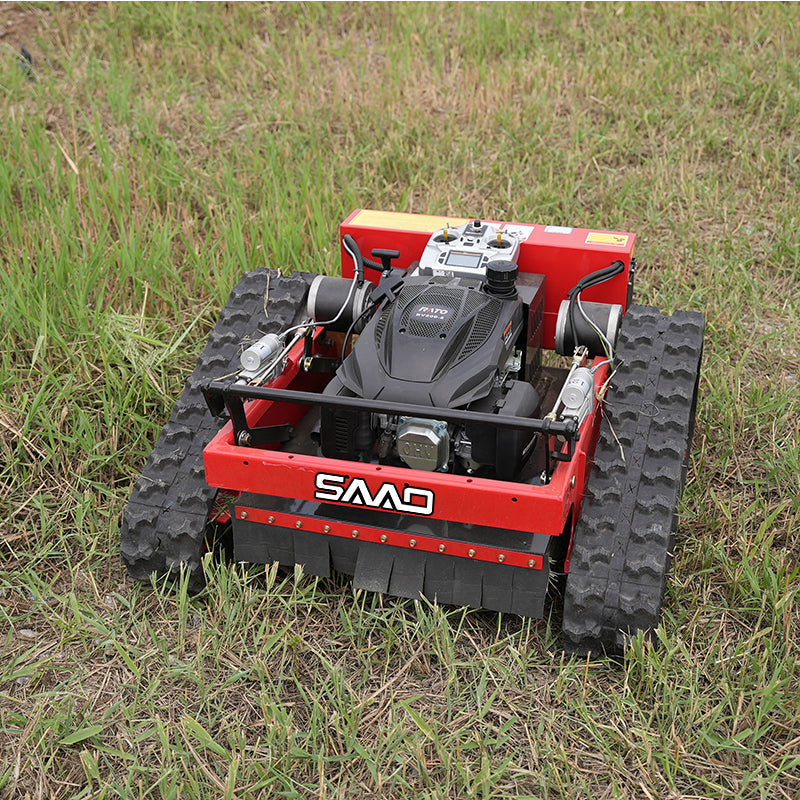
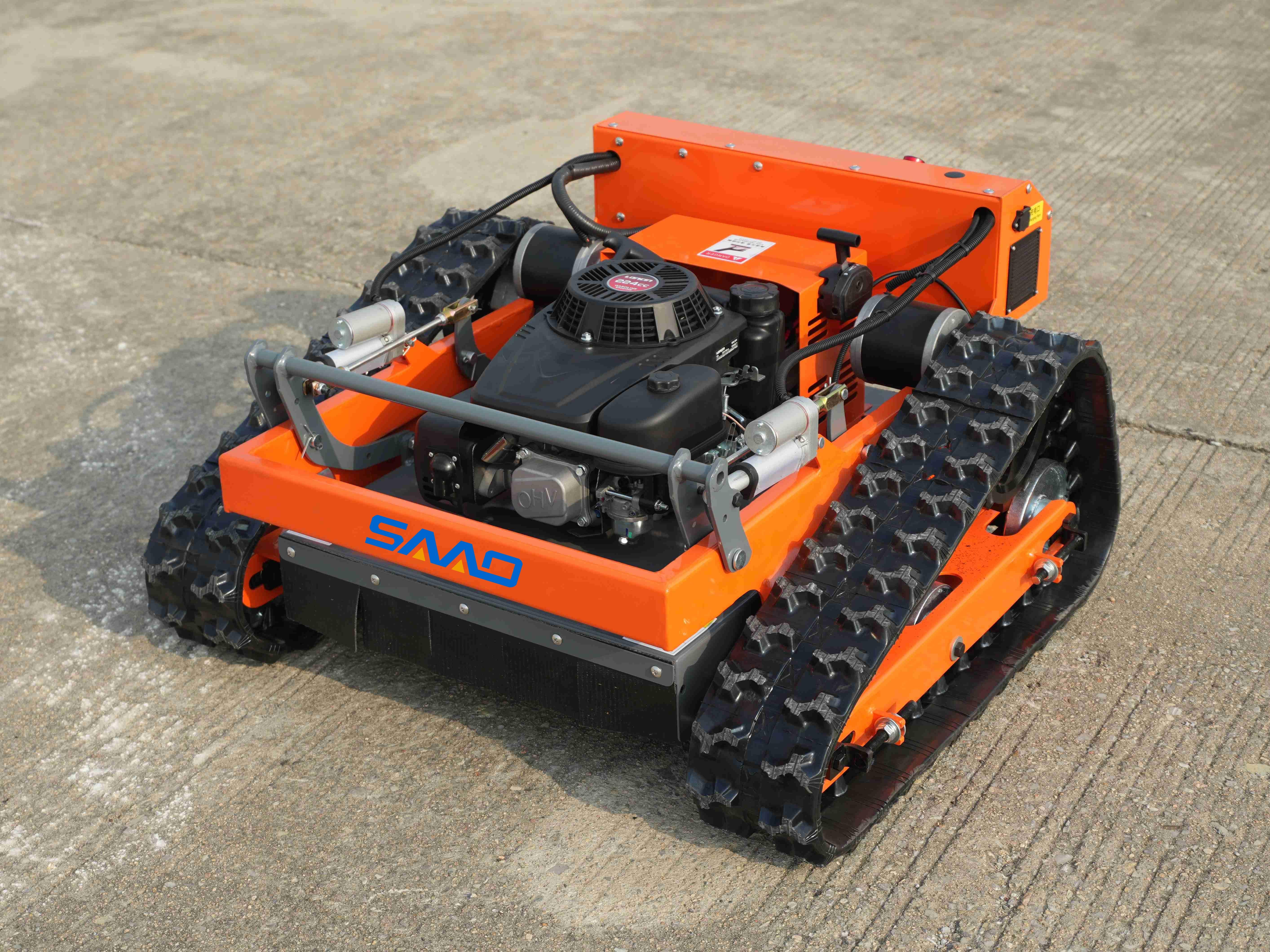
The mower shown uses a compact tracked chassis and a gasoline engine. Its design may be suitable for grass cutting and vegetation maintenance in orchards, farms, estates and other areas with uneven ground.
Before ordering, buyers should compare the complete machine specifications rather than evaluating the engine alone.
1. Match the Mower to the Vegetation
Begin by identifying what the machine needs to cut:
- Regular lawn grass
- Tall grass
- Dense weeds
- Light brush
- Seasonal vegetation
- Mixed or unmanaged growth
Ordinary grass, dense weeds and woody brush place very different loads on a cutting system. Ask the supplier whether the machine uses rotary blades, swing blades, flails or another cutting mechanism.
Also confirm the maximum recommended vegetation diameter. A mower designed for grass should not automatically be promoted as a forestry mulcher or heavy brush cutter.
2. Check the Cutting Width and Height
A wider cutting deck may cover more ground in each pass, but it can also require more space and may affect maneuverability in narrow areas.
When comparing models, confirm:
- Effective cutting width
- Minimum and maximum cutting height
- Cutting-height adjustment method
- Blade quantity and blade material
- Blade replacement procedure
- Cutting-deck ground clearance
For orchards and solar sites, the machine’s total width and height may be just as important as its cutting width.
3. Evaluate the Terrain
The working site should be evaluated before selecting a mower. Consider:
- Surface firmness
- Loose soil or mud
- Stones and hidden debris
- Side slopes and longitudinal slopes
- Ditches and drop-offs
- Access width
- Turning space
- Tree roots and obstacles
A tracked chassis can provide useful ground contact, but it does not make the mower suitable for every slope or surface.
Request the recommended working-angle limits and ask whether the stated angle applies to climbing, descending, traversing a side slope or a specific test surface. Never assume that one slope figure applies to every operating direction.
4. Review the Remote-Control System
The remote-control system is central to the operation of this type of mower. Before purchasing, confirm:
- Maximum stated control range
- Recommended practical operating range
- Operating frequency
- Battery type and runtime
- Charging time
- Signal-loss response
- Emergency-stop function
- Controls for travel, steering and cutting
- Availability of replacement transmitters
- Pairing procedure for a new remote control
The operator should maintain line of sight whenever possible. Buildings, trees, terrain and electromagnetic interference may reduce practical operating range.
5. Understand the Engine Specifications
The accompanying engine information lists an LC1P70FC, 196cc gasoline engine with 3.5kW net power at 3600rpm and 10.5N·m net torque at 2500rpm.
This information helps buyers understand the basic power unit, but it does not independently determine mowing performance. Final performance also depends on:
- Blade design and rotational speed
- Power-transmission system
- Vegetation density
- Travel speed
- Cutting height
- Deck design
- Ground condition
- Machine maintenance
Buyers should confirm the recommended gasoline grade, engine-oil specification, service intervals and cold-start procedure before operation.
6. Confirm Safety Functions
Safety features should be clearly described in the user manual. Depending on the model, important functions may include:
- Emergency-stop control
- Signal-loss shutdown or stop response
- Cutting-system engagement control
- Engine shutoff
- Protective deck or guards
- Warning labels
- Remote-control status indicators
- Safe-start sequence
Operators must receive appropriate instructions before using the equipment. Safety guards and warning labels should never be removed or bypassed.
7. Ask About Parts and After-Sales Support
Wear parts are normal on mowing equipment. Before buying, confirm the availability of:
- Cutting blades or flails
- Blade fasteners
- Drive belts
- Air filters
- Fuel filters
- Spark plugs
- Track components
- Bearings
- Remote-control batteries
- Electrical actuators and wiring
- Engine and cutting-deck parts
Ask the supplier for a parts diagram and recommended spare-parts list. For international orders, purchasing an initial wear-parts package with the machine may reduce future downtime.
Pre-Operation Inspection
A brief inspection before each use can help identify loose, damaged or worn components.
Before starting the mower:
- Inspect the work area and remove visible debris.
- Check the engine-oil level on level ground.
- Confirm that sufficient suitable fuel is available.
- Inspect the tracks for damage, wear and abnormal tension.
- Check the blades and fasteners.
- Inspect guards and protective covers.
- Look for fuel, oil or other fluid leaks.
- Test the remote-control battery and status indicators.
- Confirm that the emergency-stop function operates correctly.
- Keep people and animals outside the designated work area.
Do not reach under the cutting deck while the engine is running. Before inspecting or cleaning the cutting system, shut down the engine, isolate the starting system and wait until every moving part has stopped.
Cleaning After Operation
Grass, mud and plant material can collect around the cutting deck, tracks and cooling areas.
After the machine has stopped and cooled:
- Remove accumulated grass and debris
- Clean around engine cooling-air inlets
- Inspect the cutting deck
- Check for wrapped wire or vegetation
- Clean the tracks and undercarriage
- Inspect electrical connectors for moisture or damage
- Store the remote control in a clean, dry location
Avoid directing high-pressure water at the engine intake, electrical components, bearings, remote-control receiver or other sensitive areas unless the manufacturer specifically allows it.
Engine Maintenance
Follow the engine manufacturer’s manual for service intervals and procedures. General maintenance may include:
- Checking engine oil before use
- Replacing oil at the specified interval
- Cleaning or replacing the air filter
- Inspecting the spark plug
- Checking the fuel system
- Keeping cooling passages clean
- Using fresh, suitable gasoline
- Preparing the fuel system for long-term storage
The listed engine oil capacity is 0.6L, but operators should fill according to the dipstick and official manual rather than adding a fixed quantity without checking the level.
Track and Cutting-System Maintenance
Tracks should be checked regularly for wear, cuts, embedded objects and incorrect tension. Excessively loose tracks may derail, while excessive tension may increase wear on related components.
The cutting system should be inspected for:
- Bent or damaged blades
- Uneven blade wear
- Loose fasteners
- Damaged guards
- Abnormal vibration
- Wrapped wire or rope
- Belt wear, where applicable
Damaged cutting components should be replaced with compatible parts. Welding, reshaping or modifying blades without manufacturer approval may create an imbalance and introduce serious safety risks.
Long-Term Storage
Before storing the mower for an extended period:
- Clean and dry the machine.
- Follow the engine manual for fuel storage or draining.
- Change or check the engine oil where required.
- Inspect and protect exposed metal surfaces.
- Charge and store remote-control batteries correctly.
- Keep the mower in a dry, ventilated area.
- Prevent unauthorized access.
- Support or position the machine according to the manual.
A maintenance record should be kept with service dates, operating hours and replaced parts. This information can help with troubleshooting and warranty requests.
Conclusion
Choosing a tracked remote-controlled mower requires more than comparing engine power. Buyers should evaluate the cutting system, machine dimensions, terrain limits, remote-control functions, safety features and spare-parts support.
Routine inspection and maintenance of the engine, tracks, cutting deck and remote-control system can also reduce downtime and help the equipment deliver consistent performance.

Leave a comment
This site is protected by hCaptcha and the hCaptcha Privacy Policy and Terms of Service apply.