Article: How a Tracked Remote-Controlled Mower Helps Manage Slopes and Rough Terrain
How a Tracked Remote-Controlled Mower Helps Manage Slopes and Rough Terrain
A Practical Machine for Challenging Mowing Jobs
Maintaining grass and unwanted vegetation is not always as simple as mowing a level lawn. Orchards, farms, embankments, solar sites, roadside areas and undeveloped land may include uneven surfaces, narrow access points, dense grass or sloping terrain.
In these environments, conventional ride-on mowers and handheld cutting tools may not always be the most practical choice. A tracked remote-controlled mower provides another option by combining a crawler undercarriage, compact construction and remote operation.
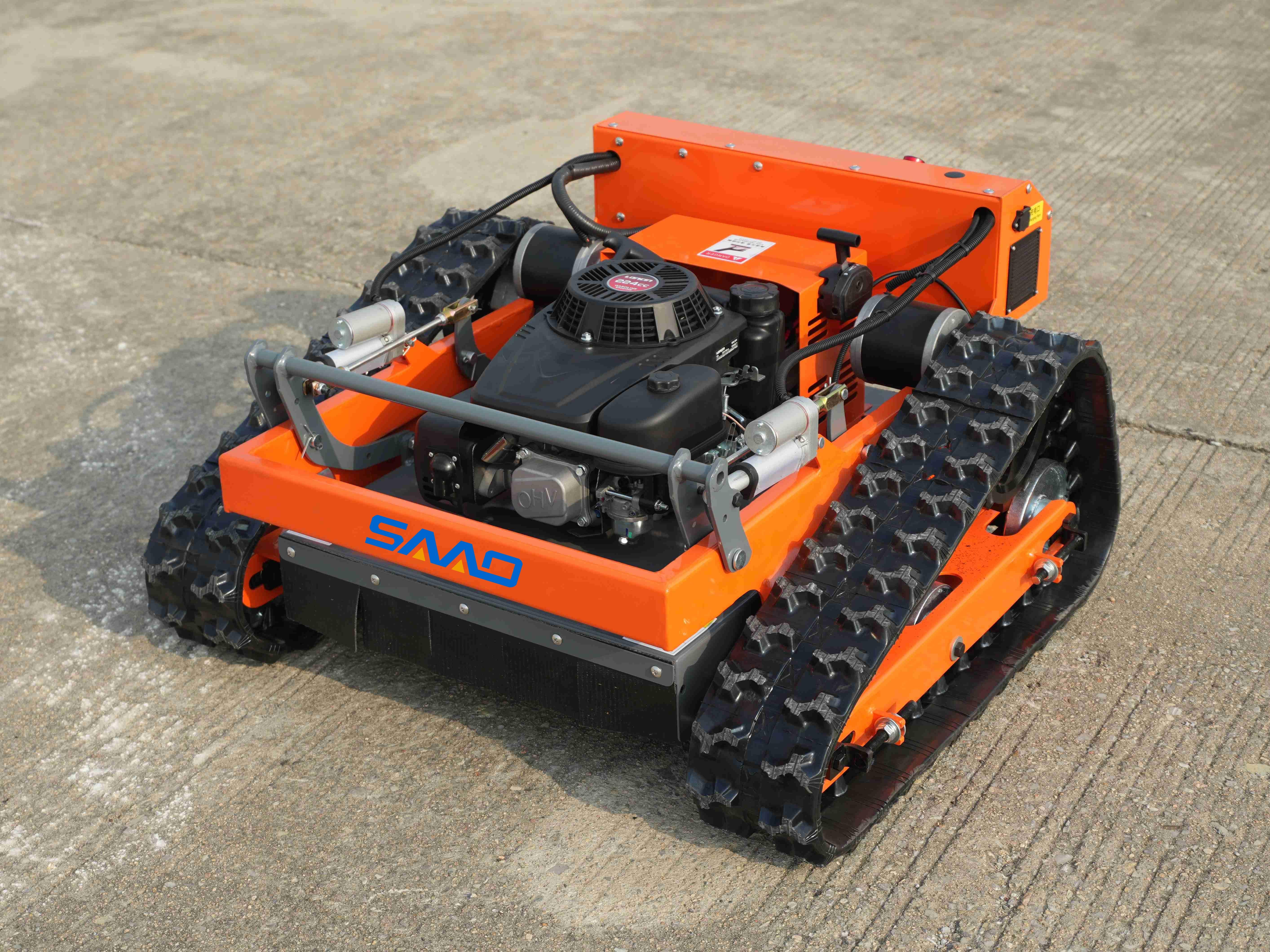
The machine shown here uses a gasoline engine and a tracked chassis. This configuration is designed for vegetation management tasks where traction, maneuverability and operator positioning are important considerations.
Why Choose a Tracked Undercarriage?
A tracked undercarriage distributes the machine’s weight across a wider ground-contact area than many conventional wheeled designs. Depending on the machine configuration and surface conditions, this can support stable movement on uneven or relatively soft ground.
The main potential benefits of a crawler design include:
- Increased ground contact compared with narrow tires
- Practical maneuverability in confined working areas
- Improved traction on loose or uneven surfaces
- Compact turning and directional control
- Suitability for farms, orchards and unmanaged land
- Reduced dependence on a seated operator platform
Actual traction and slope performance depend on the machine’s weight, center of gravity, track design, surface condition, vegetation, weather and operating method. Buyers should always confirm the manufacturer’s recommended working slope rather than relying on general descriptions such as “all-terrain.”
Remote Operation and Operator Positioning
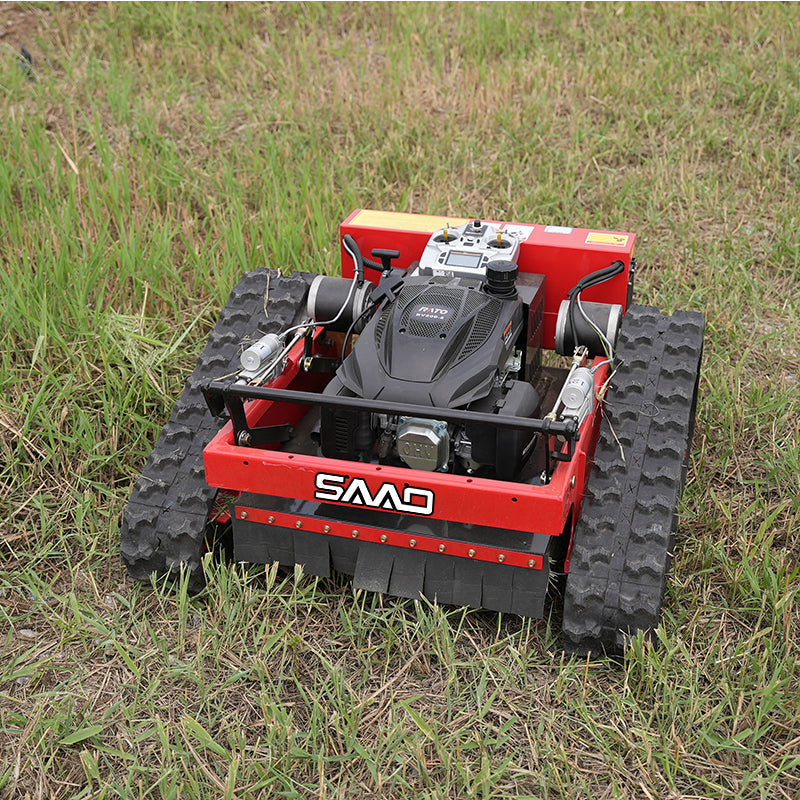
Remote operation allows the user to control the mower without sitting directly on the machine. This can provide a clearer view of the surrounding area and gives the operator more flexibility when selecting a working position.
A remote-controlled mower may be useful around:
- Low tree branches
- Dense grass and weeds
- Uneven ground
- Narrow paths
- Solar panel rows
- Pond banks and embankments
- Areas with limited access for larger machinery
Remote control does not eliminate operational risk. The operator must remain within the specified control range, maintain a clear view of the machine and keep people and animals away from the working area.
Before operation, users should also inspect the site for stones, wire, branches, glass, metal objects and other debris that could contact the cutting system.
Gasoline Power for Field Applications
The engine information shown with this mower identifies an LC1P70FC gasoline engine with the following listed specifications:
| Specification | Listed Value |
|---|---|
| Engine model | LC1P70FC |
| Engine type | Gasoline engine |
| Displacement | 196cc |
| Net power | 3.5kW at 3600rpm |
| Net torque | 10.5N·m at 2500rpm |
| Bore × stroke | 70 × 51mm |
| Fuel tank capacity | 1.0L |
| Oil capacity | 0.6L |
| Engine net weight | 12.8kg |
| Engine dimensions | 385 × 358 × 278mm |
These figures appear to describe the engine rather than the complete mower. The machine’s overall weight, cutting width, cutting height, travel speed, remote-control range and recommended working slope should be listed separately on the final product page.
The image also contains a 3.6kW heading while the detailed table states a net power output of 3.5kW at 3600rpm. Product listings should use the figure shown in the official engine manual or final technical documentation to avoid inconsistent specifications.
Where Can a Tracked Remote Mower Be Used?
A tracked remote-controlled mower can support a wide range of vegetation management projects.
Orchards and Farms
Grass and weeds can compete for space, obstruct access and make routine inspection more difficult. A compact remote mower may help maintain the ground between trees, around field boundaries and in other accessible agricultural areas.
Slopes and Embankments
Crawler tracks and remote operation can be useful where conventional mowing equipment is inconvenient. However, safe slope performance must be evaluated according to the manufacturer’s limits, terrain condition and operating direction.
Solar Farms
Vegetation around solar panel arrays may restrict access and interfere with routine inspection. A low-profile remote-controlled mower may be suitable for selected spaces between or beneath panels, provided that adequate clearance is available.
Estates and Large Properties
Remote mowers may also be used to maintain grass around large properties, parks, vacant land, roadside areas and other grounds where regular vegetation control is required.
Overgrown and Uneven Areas
For sites with tall grass or light weeds, a tracked mower can provide an alternative to manual cutting. Cutting capability still depends on blade design, cutting width, vegetation density and the presence of woody material.
What Should Buyers Confirm Before Ordering?
A good purchasing decision should be based on complete technical information rather than appearance alone. Before ordering, ask the supplier to confirm:
- Cutting width and adjustable cutting-height range
- Complete machine dimensions and operating weight
- Maximum travel speed
- Recommended working slope and test conditions
- Remote-control range
- Cutting blade or flail configuration
- Emergency-stop and signal-loss protection
- Fuel and engine-oil requirements
- Spare-blade, belt and filter availability
- Packaging dimensions and shipping weight
- Assembly and commissioning requirements
- Warranty coverage and technical support
- Applicable documentation for the destination market
Certification symbols displayed in promotional material should not be treated as confirmation that the complete machine is certified. Buyers should request certificates, test reports or declarations that identify the exact product model.
Conclusion
A gas-powered tracked remote-controlled mower can be a practical tool for grass cutting and vegetation management on farms, orchards, estates and selected areas of uneven terrain. Its crawler chassis supports ground contact and maneuverability, while remote operation gives the user more flexibility when choosing an operating position.
The correct model should be selected according to the vegetation, slope, ground condition, required cutting width and local operating requirements.
Looking for a tracked remote-controlled mower for your land maintenance project? Contact
ZHENGHEto request complete specifications, available configurations, pricing and shipping information.
Request a Quote | View Tracked Mowers

Leave a comment
This site is protected by hCaptcha and the hCaptcha Privacy Policy and Terms of Service apply.